
Seeing a garden snake near your home can be alarming, especially if you are unsure whether it is harmless or venomous. While many common garden snake species in the US are non-venomous, homeowners should still know exactly who to contact and when professional help is necessary.
The right response depends on:
- The snake’s location
- Whether pets or children are nearby
- If the snake appears dangerous
- Whether the snake is inside or outside the home
- Local wildlife laws in your state
Understanding the proper contacts can help you avoid panic, unnecessary harm to wildlife, and dangerous DIY handling mistakes.
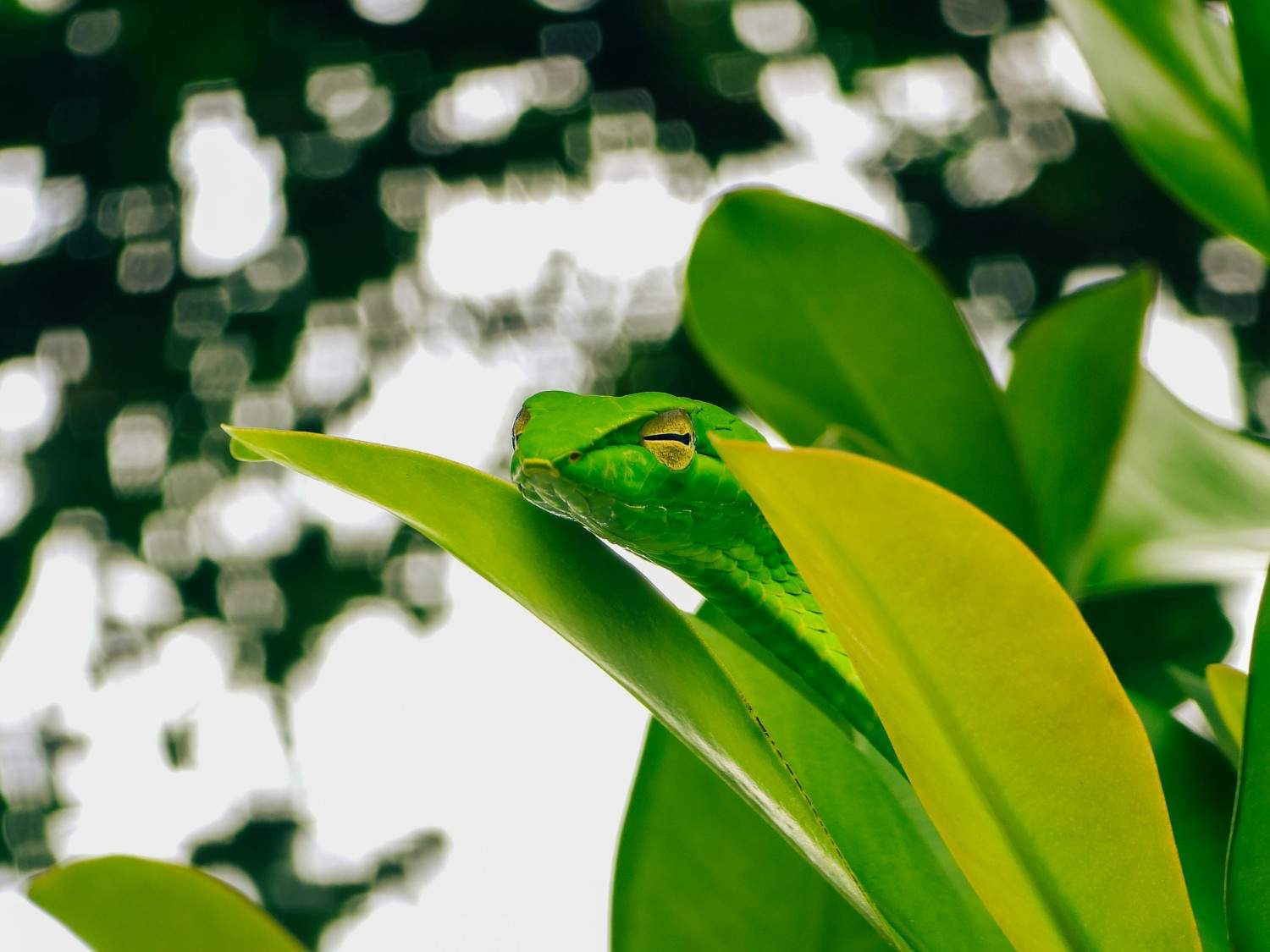
1. Local Animal Control Services
If the snake is inside your garage, basement, home, or near children and pets, your first call should usually be local animal control.
Animal control officers are trained to:
- Identify common snake species
- Assess safety risks
- Remove snakes safely
- Advise homeowners on prevention
Most cities and counties across the US have non-emergency animal control departments specifically for wildlife-related situations.
When to Call Animal Control
- Snake inside the home
- Snake refusing to leave populated areas
- You suspect the snake may be venomous
- Children or pets are at immediate risk
If the Snake is Injured
If the snake has been hurt by a lawnmower, a pet, or netting:
- Wildlife Rehabilitation Center: Look up your nearest licensed wildlife rehabilitator. They have the medical resources to treat wild animals with the goal of releasing them back into nature.
Tip:
Before calling, safely take a zoomed-in photo from a distance if possible. It can help professionals identify whether the snake is harmless or dangerous before arriving.
Also read: How to identify, prevent, & safely remove garden snakes.
2. Professional Wildlife Removal Services
For repeated snake problems, wildlife removal specialists are often the best long-term solution.
Unlike general pest control companies, wildlife professionals focus specifically on:
- Snake relocation
- Habitat inspection
- Entry-point sealing
- Snake-proof fencing recommendations
- Rodent reduction strategies
Many homeowners search for “wildlife removal near me” when they repeatedly see snakes in their backyard gardens during warmer months.
Professional wildlife experts are especially useful if:
- Snakes keep returning
- Your property borders woods or water
- You suspect nesting activity
- You cannot identify the species safely
Attention Point:
Not all pest control companies specialize in snakes. Always ask whether they specifically handle reptile removal before booking a service.
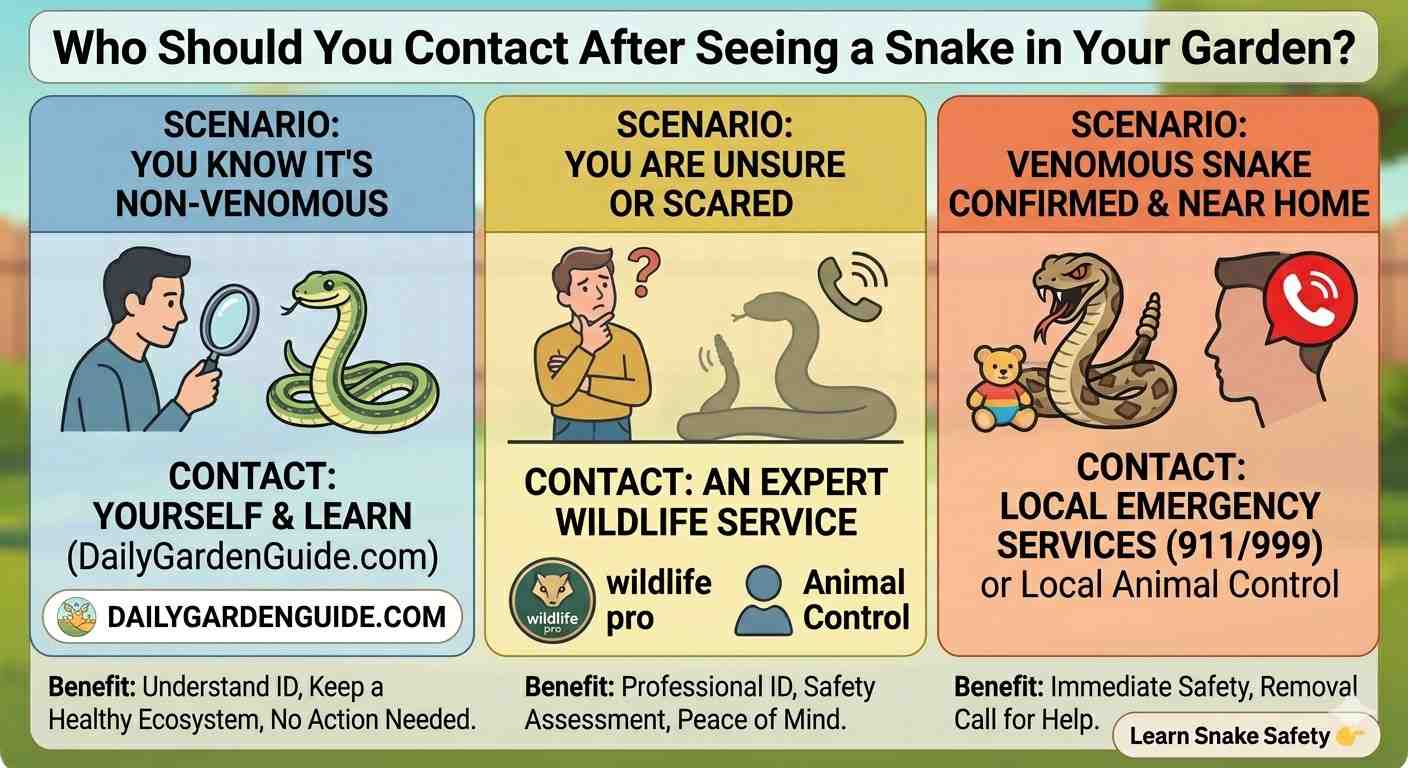
3. Emergency Services (Only in Bite Situations)
If someone is bitten by a snake and you suspect it may be venomous:
- Call 911 immediately
- Keep the person calm
- Limit movement
- Do not attempt home remedies
- Avoid cutting or sucking the bite area
According to the WHO snake Safety Guide, rapid medical treatment is the safest response for suspected venomous bites.
Signs of a Dangerous Snake Bite
- Severe swelling
- Intense pain
- Breathing difficulty
- Nausea or dizziness
- Discoloration around the bite area
Even if you are unsure, a medical evaluation is always safer than waiting.
4. State Wildlife Agencies
Some snake species are legally protected depending on your location. State wildlife departments can:
- Identify protected species
- Offer snake safety guidance
- Recommend local licensed removal experts
- Explain regional wildlife regulations
Private Wildlife Removal Services: Companies like Critter Control or local pest control companies often have dedicated wildlife handlers. (Note: They usually charge a fee.
Local Snake Relocation Groups: Many areas have volunteer networks or non-profits dedicated to saving snakes. Searching Facebook or Google for “Snake removal/relocation near me” often brings up local experts who will come relocate the snake for free or for a small donation.
This is especially important in areas where rare native snake populations are protected by law.
5. Neighbors & Community Awareness
If you notice repeated snake activity in shared outdoor spaces, it may help to inform nearby neighbors calmly, especially families with pets or children.
However:
- Avoid spreading panic
- Do not exaggerate risks
- Share prevention tips instead
Many backyard snake sightings happen because entire neighborhoods unknowingly create snake-friendly environments with:
- Overgrown grass
- Outdoor clutter
- Rodent problems
- Standing water
Community awareness often improves prevention for everyone. Here are 10 mistakes to avoid when you encounter a snake in your yard.
Who You Should NOT Contact First
Many homeowners immediately search for:
- Random pest spray companies
- DIY social media “snake catchers”
- Unlicensed animal handlers
This can create greater risks because improper handling increases the likelihood of bites and may violate local wildlife laws.
Avoid:
- Trying to trap snakes yourself
- Using fire, chemicals, or poison
- Attempting internet “hacks” for removal
- Cornering or attacking the snake
Most harmless garden snakes leave on their own if given space and escape access.
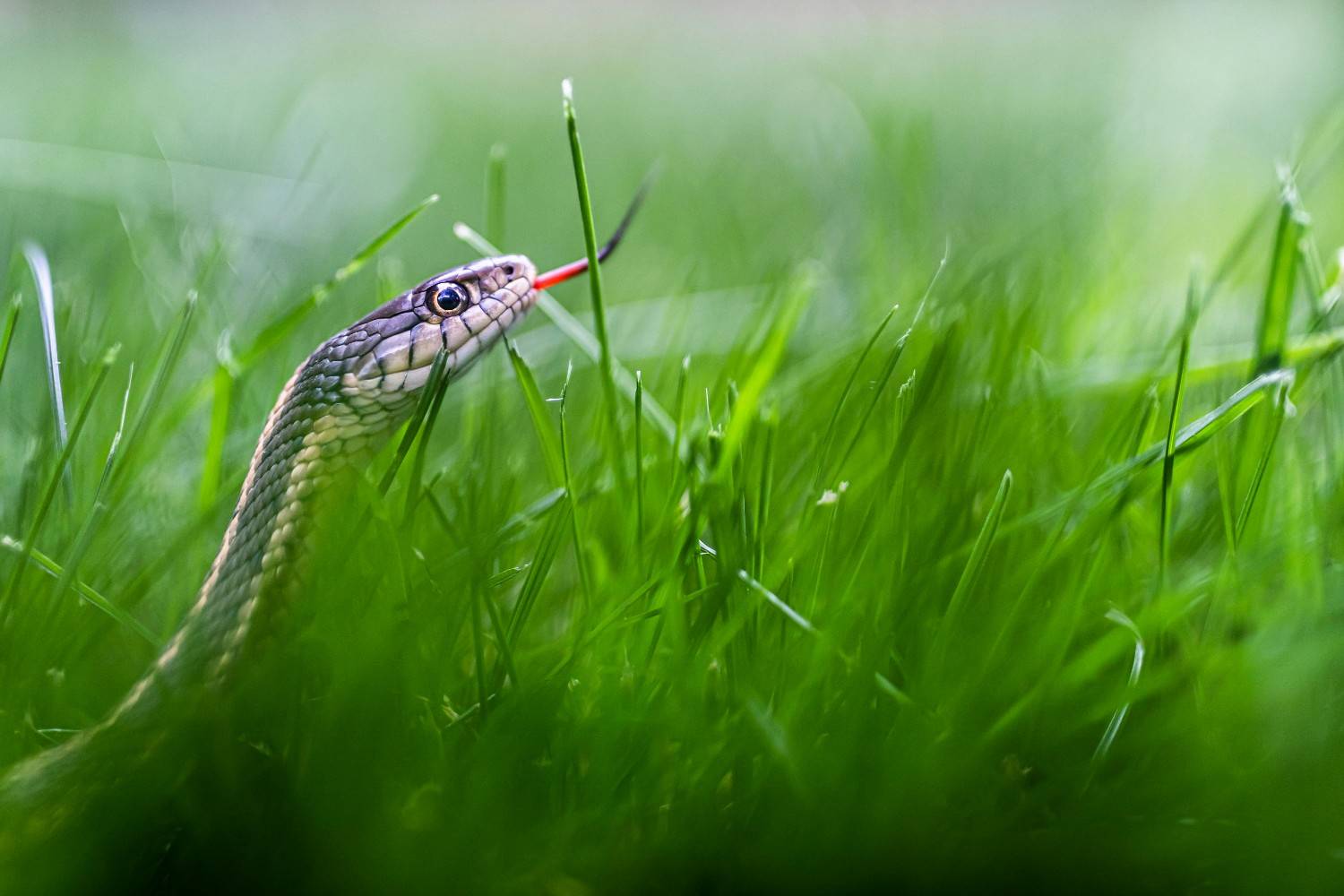
Best Immediate Steps Before Help Arrives
While waiting for professional help:
- Stay calm
- Keep pets indoors
- Watch the snake from a safe distance
- Do not block its movement
- Keep children away
- Avoid loud, sudden movements
What to Do While You Wait
- The Golden Rule: Keep your eyes on the snake from a safe distance (at least 6–10 feet away). Snakes are experts at camouflaging and hiding; if you look away to make a phone call, they will likely disappear by the time help arrives.
- Bring pets and children indoors immediately.
- Do not try to kill it. Most snake bites happen when people attempt to corner, handle, or kill a snake.
- Take a photo if safe. If you can snap a secure photo from a distance, it will help experts identify the species instantly when you call them.
Tip:
Many snakes disappear on their own within minutes because they are usually searching for shelter or food, not humans.
When to Call… No One?
If you live in an area with common, harmless garden snakes (like Garter snakes, Corn snakes, or Rat snakes), the best option is often to do nothing. They are excellent, free pest control that will eat slugs, mice, and insects, and they will usually move on to a new spot on their own within a few hours.
Final Thought
The safest response to a snake sighting is calm observation and smart decision-making. Most common garden snake species are harmless and beneficial for natural pest control, but professional help is always the best option if you are uncertain about identification or safety.
Knowing exactly who to contact – whether animal control, wildlife removal experts, or emergency services – can protect both your family and the local ecosystem while preventing unnecessary panic.
About The Author
