
Quick Answer
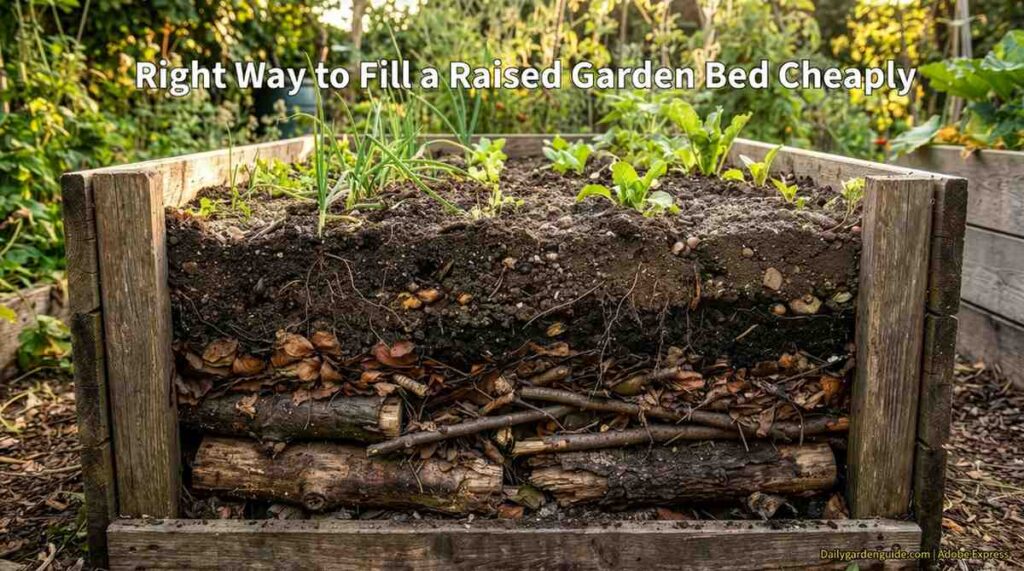
The cheapest way to fill a raised garden bed is to layer free bulk materials at the bottom (logs, branches, cardboard, straw) and save your purchased soil mix for just the top 6-12 inches, where plant roots actually feed. This method, often called the layering or hugelkultur approach, can cut your soil costs by 40-60% compared to filling the entire bed with bagged soil.
Key Takeaways
- The cheapest fill method is layering: bulky free materials on the bottom, quality soil only on top.
- Hugelkultur (logs and branches at the base) is the most durable and lowest-cost bulk filler for deep beds.
- You only need 6–12 inches of real growing soil at the top, the rest can be free organic matter.
- Free fill sources include tree services (wood chips), municipal compost sites, neighbors' fall leaves, and local "free" marketplace listings.
- Avoid filling beds entirely with rocks, gravel, or plastic bottles, they don't decompose into nutrients and can trap water incorrectly.
Introduction
If you’ve already built your bed using our raised garden bed setup guide, you already know the next problem: a single 4×8-foot bed at 12 inches deep needs roughly 32 cubic feet of soil. At retail prices, filling that bed with bagged garden soil alone can easily run $150–$250. Here’s how to get the same healthy growing bed for a fraction of that.
The trick isn’t finding a discount on soil – it’s realizing you don’t need premium soil filling the entire bed in the first place. Most of a raised bed’s depth can be built from free or low-cost organic material, with only the top layer needing a proper growing mix. Once you understand which materials go where, filling even multiple beds becomes a one-time cost of a truckload of free wood chips or leaves, rather than a recurring line item every spring.
Below, we’ll walk through the exact layering method, the cheapest filler materials to source locally, how much soil you actually need to buy, and a few mistakes that can undo your savings if you’re not careful.
Why Filling a Raised Bed Gets Expensive So Fast
Most beginners price out their raised bed, then get sticker shock at the soil aisle. A single cubic yard of quality bagged garden soil or compost can cost $30-$50, and a standard 4×8 bed at 12 inches deep requires over a cubic yard on its own. Multiply that across two or three beds, and the “cheap backyard hobby” suddenly costs several hundred dollars before a single seed goes in the ground.
The good news: not every inch of your raised bed needs to be premium soil. As covered in our best soil for raised garden beds guide, roots concentrate their feeding activity in the top layer of soil. That means the bulk of a deep bed can be filled with free or low-cost organic material, as long as the top layer where seeds and roots actually live is properly blended.
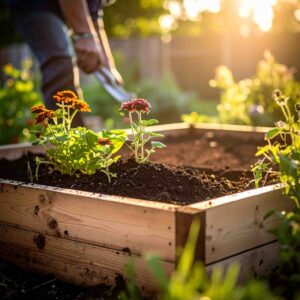
Layering Method: Cheapest Way to Fill a Raised Garden Bed
This approach (sometimes called “lasagna gardening” or a modified hugelkultur bed) builds your bed in stacked layers, from bulky and free at the bottom to fine and nutrient-rich at the top.
Layer 1: Bulk Fillers (Bottom 30–50% of the Bed)
This is where you save the most money. Fill the base of a deep bed (anything over 12 inches) with:
- Untreated logs, branches, and sticks
- Fallen leaves
- Straw or hay
- Cardboard (remove tape and labels)
These materials break down slowly, creating air pockets for drainage and releasing nutrients as they decompose over several seasons.
Layer 2: Compostable Green Material (Middle 20–30%)
- Grass clippings
- Kitchen scraps (vegetable peels, coffee grounds)
- Shredded leaves
- Aged manure
This layer feeds the microbial activity that turns your bottom layer into usable soil over time.
Layer 3: Finished Growing Soil (Top 6–12 Inches)
This is the only layer that needs to be a proper blended mix. Use the same ratio recommended in our soil guide: roughly 60% topsoil, 30% compost, 10% perlite or coarse sand. Don’t skimp here; this is the zone where seeds germinate and where most feeder roots live.
7 Budget-Friendly Filler Materials for Raised Beds
You don’t need to fill an entire raised bed with expensive garden soil. Using low-cost or free organic materials in the lower layers can significantly reduce costs while improving drainage, moisture retention, and soil health over time. Here are some of the best budget-friendly filler materials to consider when building a raised garden bed:
| Filler Material | Cost | Best Layer | Notes |
|---|---|---|---|
| Logs & branches (hugelkultur base) | Free–Low | Bottom | Best for beds 12"+ deep; improves drainage as it rots. |
| Cardboard (untreated) | Free | Bottom | Also suppresses weeds from below. |
| Fallen leaves | Free | Bottom/Middle | Collect in autumn; shred if possible. |
| Straw or spoiled hay | Low | Bottom/Middle | Avoid hay with seed heads to prevent weeds. |
| Wood chips (from tree services) | Free–Low | Bottom | Ask local arborists for a free drop-off. |
| Municipal compost | Free–Low | Middle/Top | Many cities offer free compost pickup. |
| Native soil (small amount) | Free | Middle | Use sparingly; don't make it the majority. |
1. Logs and Branches (Hugelkultur Base)
Untreated wood at the bottom of a deep bed is the single biggest money-saver. As it slowly decomposes, it holds moisture like a sponge and feeds the soil above it for years.
2. Cardboard
A flattened layer of plain cardboard at the very bottom smothers grass or weeds beneath the bed and breaks down within a season, adding organic matter.
3. Fallen Leaves
Ask neighbors if you can take their bagged leaves in autumn. Shredded leaves (“leaf mold”) are one of the best free soil conditioners available.
4. Straw or Spoiled Hay
Farm supply stores often sell “spoiled” straw bales at a steep discount since they’re no longer suitable for livestock bedding, perfect for garden filler.
5. Wood Chips from Local Tree Services
Arborists frequently need to dispose of chipped wood and will drop off a full truckload for free. Use these in the bottom half of the bed only, since fresh wood chips can temporarily tie up nitrogen if mixed into the top growing layer.
6. Municipal or Community Compost
Many city waste departments offer free or low-cost finished compost from their yard-waste programs. Check your local government’s public works page before buying bagged compost.
7. A Small Amount of Native Soil
As mentioned in our soil guide, mixing in a modest amount of soil from your own yard can stretch your budget, as long as it isn’t the majority of your mix and hasn’t been treated with pesticides.
How Much Premium Soil Do You Actually Need?
Using the layering method, you typically only need to purchase blended soil for the top 6–12 inches of your bed, not the full depth.
Quick formula: Length (ft) × Width (ft) × Fill Depth Needed (ft) = Cubic Feet of Soil to Buy
For example, a 4×8-foot bed only needs soil for the top 12 inches (1 foot): 4 × 8 × 1 = 32 cubic feet of purchased soil, even if the total bed is 24 inches deep.
That’s roughly half the material cost of filling the entire depth with bagged soil, since the bottom layers are made of free organic material.
How to Fill a Raised Bed with Cardboard (Step-by-Step)
Cardboard is one of the most searched-for cheap fillers on its own, so here’s the exact process:
- Flatten plain cardboard boxes and remove all tape, staples, and glossy labels.
- Lay a single overlapping layer directly on the ground (or on your bed’s bottom, if it has one) before adding any other filler.
- Wet the cardboard thoroughly with a hose; dry cardboard blocks water and slows the composting process.
- Add your bulk filler (logs, leaves, straw) directly on top.
- Finish with your soil blend as usual.
The wet cardboard layer smothers grass and weeds growing beneath the bed and breaks down into organic matter within a few months, so you get weed suppression and free soil building in one step
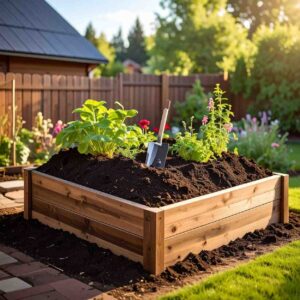
How to Fill a 12-Inch Raised Garden Bed Specifically
Twelve inches is the most common raised bed depth, and it’s shallow enough that the classic three-layer hugelkultur approach (with logs and branches) usually isn’t practical; there simply isn’t enough room. For a 12-inch bed, simplify to a two-layer method instead:
- Bottom 4–6 inches: Shredded cardboard, straw, or dry leaves, lightly moistened.
- Top 6–8 inches: Full soil blend (topsoil, compost, and perlite/sand).
This still cuts your purchased soil volume by 40–50% while leaving enough depth for root vegetables and most annual crops. If you’re growing deep-rooted vegetables like carrots or potatoes, keep the soil layer closer to 8 inches rather than 6.
Filling a Raised Bed on Legs or an Elevated Planter
Elevated beds and beds on legs follow different rules than in-ground raised beds, mainly because of their weight and the lack of native soil or ground contact underneath to draw from.
- Skip heavy bulk fillers like logs and rocks. An elevated frame has a weight limit, and wet logs get heavy fast.
- Use lightweight void fillers instead: empty plastic nursery pots (turned upside down), crushed aluminum cans, or plastic water bottles placed in the bottom few inches, to reduce the total soil needed without adding weight.
- Always line the bottom with landscape fabric or a coco liner first so soil doesn’t wash out through drainage gaps, since elevated beds typically drain faster than ground-level beds.
- Budget for slightly more soil, not less, since there’s no layer of decomposing bulk material feeding the bed from below the way there is in a ground-level hugelkultur setup, compensate by mixing in extra compost instead.
Cheap Fill for Vegetable Beds vs. Flower or Ornamental Beds
The layering method works for both, but the ratio should shift depending on what you’re growing:
Bed Type | Recommended Soil Depth | Why |
Vegetables (tomatoes, peppers, squash) | 10–12 inches of quality soil | Heavy feeders need more root volume and nutrients |
Root vegetables (carrots, potatoes) | 8–12 inches, loose and rock-free | A compacted or chunky bulk filler can deform roots |
Flowers/ornamentals | 6–8 inches of quality soil | Shallower root systems tolerate more bulk filler underneath |
Herbs | 6–8 inches | Most herbs prefer leaner, well-draining soil |
If you’re filling a bed specifically for vegetables, don’t cut corners on the top layer’s depth just to save money; under-filled vegetable beds are among the most common causes of stunted plants in raised-bed gardening.
Where to Find Free or Cheap Fill Materials
- Local tree services, call and ask if they need somewhere to dump wood chips.
- Community “buy nothing” or free marketplace groups often list free cardboard, leaves, or extra soil.
- Municipal composting programs often offer free pickup for residents
- Coffee shops often give away used coffee grounds for composting
- Neighbors during fall cleanup, bagged leaves are usually free for the taking
Common Mistakes When Filling a Raised Bed Cheaply
When trying to save money, it’s easy to make choices that create problems later. Avoiding a few common mistakes will help your raised garden bed drain properly, support healthy root growth, and provide nutrients as the organic materials decompose. Here are the most common pitfalls to watch out for:
Skipping the Top Soil Layer Entirely
Free bulk material is great for the base, but seeds and young roots still need a properly blended growing layer on top. Don’t stretch cheap filler all the way to the surface.
Using Treated Wood or Painted Scraps
Only use untreated, chemical-free wood at the base of a bed. Treated lumber can leach chemicals into your soil over time.
Filling With Rocks or Plastic
Rocks and plastic bottles don’t decompose into usable nutrients and can create uneven drainage pockets. Stick to organic, biodegradable bulk fillers.
Using Fresh, Undecomposed Wood Chips in the Root Zone
Fresh wood chips mixed directly into your top growing layer can temporarily rob nitrogen from your plants as they break down. Keep them in the bottom layers only.
Cost Comparison: Filling a 4×8 Raised Bed (12" Deep)
Method | Estimated Cost | Time to Settle |
100% bagged garden soil | $150–$250 | Ready immediately |
Layering method (bulk base + top soil) | $60–$100 | 1–2 weeks for initial settling |
Hugelkultur with free wood/leaves + top soil | $40–$80 | 2–4 weeks; improves over seasons |
Frequently Asked Questions
What is the cheapest way to fill a raised garden bed?
Layering free bulk materials like logs, branches, cardboard, and leaves at the bottom, then topping with just 6–12 inches of purchased blended soil, is the most affordable method available.
Can I fill the bottom of a raised bed with just leaves and sticks?
Yes, for beds deeper than 12 inches. This “hugelkultur” style base decomposes over time, adding nutrients and improving drainage, as long as the top growing layer still has proper soil.
Do wood chips work as raised bed filler?
Wood chips work well in the bottom layers of a deep bed but shouldn’t be mixed into the top growing layer, since fresh wood chips can temporarily reduce available nitrogen for young plants.
How deep does the soil layer need to be if I use cheap bulk filler underneath?
Plan for at least 6–8 inches of quality soil on top for shallow-rooted crops, and 12 inches for most vegetables, regardless of what fills the layers beneath it.
Is it safe to use cardboard inside a raised garden bed?
Yes, as long as it’s plain cardboard without glossy coatings, heavy tape, or ink-heavy branding. It breaks down naturally and helps suppress weeds from below.
Will free-fill materials attract pests?
Untreated dry organic material, such as leaves, straw, and logs, is generally safe. Avoid using materials that still contain food residue or fresh manure directly beneath the root zone, since this can attract unwanted pests.
How long does it take a hugelkultur-style bed to become fully productive?
The base layer continues to improve over 1–3 growing seasons as it decomposes, but the topsoil layer is plantable immediately, since it’s a proper growing mix from day one.
How do you fill a raised bed on legs or an elevated planter cheaply?
Avoid heavy bulk fillers like logs or rocks, since elevated frames have weight limits. Instead, use lightweight void fillers such as upside-down plastic nursery pots, and compensate with a bit more compost in the top layer since there’s no ground contact feeding the bed from below.
What’s the best cheap way to fill a 12-inch raised bed?
For a 12-inch bed, use a simplified two-layer method: 4–6 inches of moistened cardboard or straw on the bottom, and 6–8 inches of full soil blend on top. This still significantly reduces the volume of soil purchased while leaving sufficient root depth for most vegetables.
Do vegetable beds need more soil depth than flower beds when filling cheaply?
Yes. Vegetables, especially heavy feeders like tomatoes and squash, generally need 10–12 inches of quality soil, while flowers and herbs can perform well with 6–8 inches, allowing more bulk filler underneath.
Bottom Line
You don’t need to buy a full truckload of bagged soil to fill a raised garden bed properly. By layering free bulk materials at the bottom and reserving your budget for a quality soil blend on top, you can build a productive bed for a fraction of the cost, and it often performs even better over time as the base layer breaks down into rich, natural fertilizer.
If you haven’t finalized your soil ratio yet, revisit our best soil for raised garden beds guide for the exact mix to use on top, or start from the beginning with our complete raised garden bed setup guide.
Also read: 25 Drought-Tolerant Plants for Low-Maintenance Gardens.
About The Author

Mamta Sahney
Mamta Sahney is the founder of Daily Garden Guide and a content strategist specializing in research-driven gardening and home living content. She creates practical guides on raised bed gardening, plant care, pest control, landscaping, and seasonal gardening, helping home gardeners make informed decisions with clear, reliable advice.