
Introduction
When people search for egg protein, they often focus on one question: how many grams of protein are in an egg?
While protein quantity matters, nutrition experts increasingly emphasize protein quality. Two foods may contain the same amount of protein, yet the body can absorb and utilize them very differently.
This is where eggs stand out.
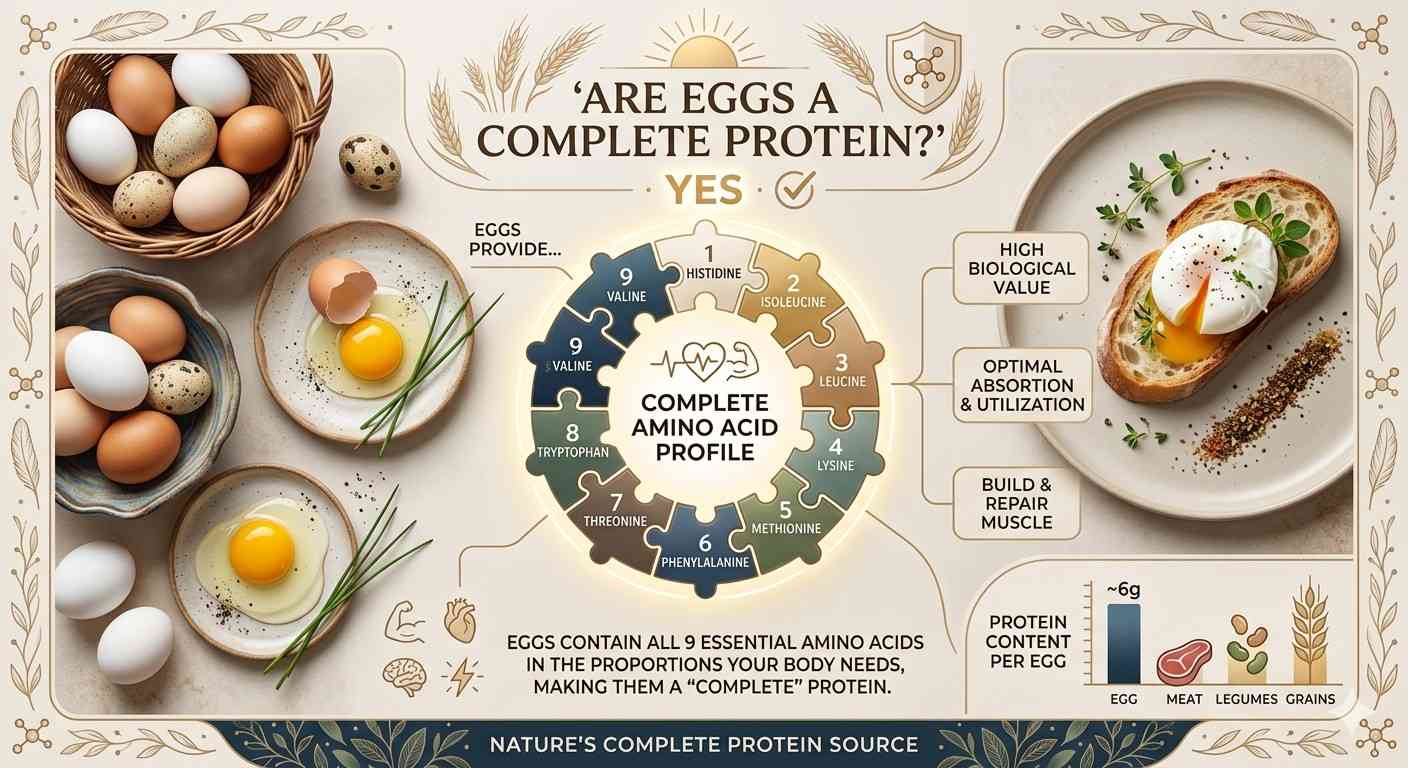
Eggs are considered one of nature’s most complete protein sources because they provide all nine essential amino acids in ideal proportions while offering exceptional digestibility and bioavailability.
In this daily garden guide, we’ll explain why eggs are called a complete protein, how they compare with meat, dairy, and plant-based proteins, and how many eggs you may need to meet your daily protein goals.
Key Takeaways
- Eggs are a complete protein, containing all 9 essential amino acids.
- One large egg provides about 6–7 grams of high-quality protein.
- Egg protein is highly digestible and bioavailable, making it easy for the body to use.
- Eggs support muscle growth, weight management, and overall health.
- Compared to many plant proteins, eggs naturally provide a complete amino acid profile.
- Beyond protein, eggs supply important nutrients like choline, vitamin D, and selenium.
- Their affordability, versatility, and nutrient density make eggs one of the best complete protein foods available.
What Is a Complete Protein?
A complete protein contains all nine essential amino acids that the human body cannot produce on its own.
These amino acids must come from food:
- Histidine
- Isoleucine
- Leucine
- Lysine
- Methionine
- Phenylalanine
- Threonine
- Tryptophan
- Valine
Foods containing all of these amino acids in adequate amounts are classified as complete proteins.
Examples include:
- Eggs
- Chicken
- Beef
- Fish
- Milk
- Greek yogurt
- Whey protein
What Research Says About Egg Protein
- Egg protein is frequently used as a reference standard in protein quality assessments because of its amino acid balance.
- Eggs contain leucine, an amino acid strongly associated with muscle protein synthesis.
- Studies suggest that high-quality protein sources can help support satiety, muscle maintenance, and healthy aging.
- Egg protein has a high digestibility score, meaning the body can efficiently utilize much of the protein consumed.
Why Are Eggs Considered a Complete Protein?
Eggs naturally contain every essential amino acid required for:
- Muscle growth
- Tissue repair
- Hormone production
- Enzyme function
- Immune health
A single large egg provides approximately 6–7 grams of high-quality protein along with a highly balanced amino acid profile.
What makes eggs unique is not just the presence of these amino acids but their ratio and digestibility.
This is one reason eggs are often used as a benchmark when evaluating protein quality in nutrition research.
Related Reading: How Much Protein in an Egg?
Why Protein Quality Matters More Than Protein Quantity
| Scenario | Total Protein | Protein Quality |
|---|---|---|
| 25g from processed foods | High | Lower |
| 18g from eggs + yogurt | Moderate | Higher |
| 25g from chicken + eggs | High | Excellent |
Essential Amino Acids Found in Eggs
Leucine
Leucine is the key amino acid responsible for triggering muscle protein synthesis.
Isoleucine and Valine
These branched-chain amino acids support recovery, endurance, and energy production.
Lysine
Supports collagen production and immune function.
Methionine
Important for metabolism and cellular repair.
Tryptophan
Supports mood regulation and serotonin production.
Together, these amino acids make eggs one of the most nutritionally complete foods available.
Complete Protein Foods Comparison
| Food | Complete Protein | Protein Per Serving | Digestibility |
|---|---|---|---|
| Egg | ✔ Yes | 6–7g per egg | Excellent |
| Chicken Breast | ✔ Yes | 25–30g | Excellent |
| Greek Yogurt | ✔ Yes | 15–20g | Excellent |
| Whey Protein | ✔ Yes | 20–30g | Excellent |
| Lentils | ✘ No | 18g per cup | Moderate |
| Rice | ✘ No | 4g per cup | Moderate |
| Quinoa | ✔ Yes | 8g per cup | Good |
Protein Quality vs Protein Quantity
When it comes to building muscle, recovering from workouts, and maintaining general health, nutritionists and coaches often debate Protein Quality versus Protein Quantity.
The short answer? Quantity is the foundation, but Quality dictates how efficiently that foundation is built. If you do not eat enough total protein, the quality does not matter. But if you are eating efficiently, quality allows you to hit your goals with fewer calories and less digestive strain.
Here is a breakdown of how the two concepts differ and how to balance them.
1. Protein Quantity: The Foundation (How Much)
Quantity refers simply to the total grams of protein you consume in a 24-hour period. This is the single most important metric for muscle growth and maintenance.
Your body is constantly in a state of protein turnover—breaking down old muscle tissue and building new tissue. To build new muscle (or preserve it while losing fat), you must be in a state of positive nitrogen balance, which only happens if you ingest enough total protein.
- The Minimum (Survival): The Recommended Dietary Allowance (RDA) is 0.8 grams per kilogram of body weight. This is enough to prevent a deficiency, but not enough to optimize muscle growth or recovery.
- The Optimal (Thriving): For active individuals and those looking to build muscle, science universally points to a range of 1.6 to 2.2 grams of protein per kilogram of body weight (roughly 0.7 to 1 gram per pound).
- The Rule of Thumb: If you are chronically under-eating total protein, eating the highest-quality grass-fed whey or organic eggs will not save your gains. Volume is king.
2. Protein Quality: The Efficiency (What Kind)
Once your quantity is secured, quality becomes the determining factor. Protein quality is defined by two main factors:
- Amino Acid Profile: Does it contain all nine Essential Amino Acids (EAAs) that your body cannot make on its own? More specifically, does it contain high amounts of leucine, the amino acid responsible for triggering muscle protein synthesis?
- Bioavailability/Digestibility: How much of the protein you swallow actually makes it into your bloodstream? This is measured by scales like Biological Value (BV) or the modern standard, DIAAS (Digestible Indispensable Amino Acid Score).
- High-Quality (Complete): Eggs, dairy (whey/casein), meat, fish, and soy. These have perfect or near-perfect absorption rates and amino acid profiles.
- Lower-Quality (Incomplete): Most grains, nuts, and seeds. They may lack one or more EAAs (often lysine or methionine) and contain fiber or anti-nutrients that slightly hinder total absorption.
When Does Which Matter?
Scenario A: The “Brute Force” Method (Quantity > Quality)
If you are eating a very high-protein diet (e.g., 180+ grams a day) from a wide variety of foods, protein quality actually stops mattering as much. By sheer volume, you will accidentally consume enough of all the essential amino acids your body needs, even if a large chunk of that protein comes from “lower quality” sources like beans, oats, or wheat.
Scenario B: The “Precision” Method (Quality > Quantity)
Protein quality becomes incredibly important in three specific situations:
- In a Calorie Deficit: If you are trying to lose fat, you have fewer total calories to work with. You cannot afford to waste 500 calories eating jars of peanut butter just to get 20g of lower-quality protein. You need highly efficient, low-calorie, high-quality sources like egg whites, chicken breast, or whey.
- Plant-Based Diets: Vegans naturally consume lower-quality (less bioavailable) proteins. To compensate, they either need to eat more total quantity (about 20% more total protein to make up for the absorption difference) or be very strategic about eating high-quality plant sources like soy or blending pea/rice proteins.
- Aging: As you get older, your body becomes victim to “anabolic resistance”, it gets worse at using protein. Older adults need higher quality protein (specifically high in leucine) to trigger the same muscle-building response that a younger person gets from a lesser source.
To sum up, hit your Quantity first. Establish a daily goal (e.g., 150 grams) and make sure you reach it consistently. Once you can do that, focus on Quality by ensuring that the majority of those grams come from highly bioavailable sources to keep your calories in check and your muscle protein synthesis maximized.
Also read: Egg White vs Whole Egg: Which Is Better for Protein, Weight Loss and Muscle Gain?
Egg Protein Bioavailability Explained
Bioavailability refers to how effectively your body absorbs nutrients.
Egg protein has one of the highest biological values among natural foods.
This means a large percentage of the protein consumed can be utilized for muscle repair, growth, and metabolic functions.
Compared with many plant proteins, eggs require less combining and processing to deliver complete amino acid nutrition.
Eggs vs Plant-Based Proteins
Many plant foods contain protein, but not all are complete proteins.
When comparing eggs to plant-based proteins, the conversation shifts from just measuring pure protein to evaluating bioavailability, amino acid profiles, and overall dietary benefits (like fiber vs. dietary cholesterol).
While eggs offer a perfectly packaged, highly absorbable protein, plant-based proteins bring their own unique health benefits to the table, often requiring a slightly more strategic approach to get the same muscle-building results.
The Tale of the Tape (Per 100g)
Comparing eggs to plant proteins can be tricky because plant proteins come in both whole-food forms (like beans and tofu) and isolated powders. Here is how whole eggs stack up against two of the most popular whole-food plant sources:
Whole Eggs vs Tofu vs Lentils: Nutrition Comparison
| Feature | Whole Eggs | Firm Tofu (Soy) | Lentils (Cooked) |
|---|---|---|---|
| Protein | 13g | 17g | 9g |
| Calories | 143 | 144 | 116 |
| Fats | 9.5g | 8.7g | 0.4g |
| Fiber | 0g | 2.3g | 7.9g |
| Biological Value (BV) | 100 | ~74 | ~50 |
Breakdown by Goal and Use Case
1. The Absorption Champion: Eggs
Eggs are animal proteins, meaning they naturally contain all nine essential amino acids in the exact ratios the human body needs.
- Maximum Efficiency: As noted by their perfect Biological Value (100), your body extracts and utilizes the protein from eggs incredibly efficiently. There is virtually no “wasted” protein.
- Verdict: If you are not restricted by dietary preferences and want the most straightforward, highly bioavailable protein source with no need to mix and match foods, eggs are unmatched.
2. The Plant Heavyweight: Soy (Tofu, Tempeh, Edamame)
Soy is one of the rare plant foods that is a complete protein, meaning it contains all nine essential amino acids just like meat or eggs.
- Comparable Density: Firm tofu actually contains more protein per 100g than whole eggs, for almost the exact same amount of calories and fat. It also contains zero cholesterol.
- Verdict: Soy is the closest 1-to-1 replacement for animal proteins in a plant-based diet. It is an excellent staple for vegetarians and vegans looking to build muscle without overcomplicating their meal prep.
3. The Health and Fiber Powerhouse: Legumes (Lentils, Beans, Peas)
Most plant proteins, including lentils, are incomplete proteins. They are typically low in the essential amino acid methionine. Furthermore, the fiber and anti-nutrients (like phytic acid) in legumes can lower the bioavailability of the protein they contain.
- The Fiber Trade-off: While you have to eat more volume to get the same amount of usable protein, lentils provide a massive dose of dietary fiber, complex carbohydrates, and minerals like iron and folate, which eggs lack entirely.
- Verdict: Perfect for overall health, digestion, and sustained energy. To maximize muscle building with legumes, you just need to pair them with other protein sources throughout the day (like rice, which contains the methionine that lentils lack).
“Complete Protein” Myth
For decades, nutritionists advised vegetarians that they had to combine complementary proteins (like rice and beans) in the exact same meal to form a complete protein.
Modern nutritional science has debunked this. Your liver stores a pool of essential amino acids over the course of the day. As long as you eat a varied diet of different plant proteins (e.g., oats in the morning, beans at lunch, seeds or nuts as a snack) within a 24-hour period, your body will mix and match them on its own to build complete proteins.
Eggs vs Chicken Protein
When comparing eggs to chicken, we are looking at two of the most popular muscle-building foods on the planet. Both are complete proteins containing all nine essential amino acids, but they serve very different strategic roles in a diet. If dairy proteins are about digestion speed, the chicken-versus-egg debate is really about protein density versus nutrient variety.
You do not have to choose just one. A smart nutritional strategy uses eggs for breakfast to secure highly bioavailable protein and essential fats to start the day, and chicken for lunch or dinner to easily pack in raw protein volume without overshooting your daily calorie limits.
The Tale of the Tape (Per 100g)
Note: 100g of egg is roughly two large eggs, while 100g of chicken breast is approximately the size of a deck of cards.
| Feature | Chicken Breast (Cooked) | Whole Eggs | Egg Whites |
|---|---|---|---|
| Protein | 31g | 13g | 11g |
| Calories | 165 | 143 | 52 |
| Fats | 3.6g | 9.5g | 0g |
| Biological Value (BV) | 79 | 100 | 100 |
Eggs vs Milk and Dairy Proteins
Milk, cheese, yogurt, and whey protein are complete proteins. Both egg and dairy proteins (whey and casein) are considered “gold standard” complete proteins. They contain all nine essential amino acids your body needs to build muscle, repair tissue, and function optimally. However, they behave very differently in your digestive tract. Choosing between them comes down to digestion speed, amino acid profiles, and your tolerance to dairy.
However, eggs offer advantages for people who:
- Are lactose intolerant
- Want minimally processed protein
- Prefer whole-food nutrition
Here is how the three major contenders stack up:
Whey vs Casein vs Egg White Protein: Which Is Better?
| Feature | Whey Protein (Dairy) | Casein Protein (Dairy) | Egg White Protein |
|---|---|---|---|
| Digestion Speed | Fast (1–2 hours) | Slow (7–8 hours) | Moderate (3–5 hours) |
| Leucine Content | ~11% | ~9% | ~9% |
| Biological Value (BV) | 104 | 77 | 100 |
| Lactose | Yes (varies by type) | Yes | None |
| Best Used | Post-workout | Before bed | Anytime or for dairy-free diets |
How Many Eggs a Day Are Needed to Meet Protein Requirements?
Protein needs vary by age and activity level.
- Sedentary Adults
Approximately 0.8 grams of protein per kilogram of body weight. - Active Individuals
1.2–2.0 grams per kilogram. - Strength Training and Muscle Gain
1.6–2.2 grams per kilogram.
Since one large egg provides about 6–7 grams of protein, eggs can contribute significantly toward daily protein targets but are best consumed alongside other protein-rich foods.
Quick Answers About Egg Protein
| Question | Short Answer |
|---|---|
| Are eggs a complete protein? | Yes, eggs contain all 9 essential amino acids required by the body. |
| Is chicken a complete protein? | Yes, chicken is a complete protein source with all essential amino acids. |
| Is milk a complete protein? | Yes, milk provides all nine essential amino acids and high-quality protein. |
| How many eggs should I eat daily? | Your ideal intake depends on your age, activity level, and overall protein requirements. |
| Which is better, eggs or whey protein? | Eggs offer whole-food nutrition, while whey provides concentrated protein. Both can support a healthy diet. |
Are Eggs Good for Children?
Eggs are among the best complete protein foods for kids because they provide:
- High-quality protein
- Healthy fats
- Choline for brain development
- Vitamins A, D, and B12
They are easy to prepare and fit naturally into breakfast, lunch, dinner, or snacks.
You may also like to read:10 Amazing Health Benefits of Eggs You Should Know in 2026
My Practical Observation After Tracking Protein Intake
One thing I noticed while helping readers understand protein intake is that many people focus only on total grams of protein and ignore protein quality.
For example, someone may consume 20 grams of protein from processed snacks, while another person gets 18–20 grams from eggs, yogurt, and lean meat. On paper the numbers look similar, but the quality of amino acids and nutrient density are completely different.
For most people, including one or two eggs at breakfast is one of the easiest ways to improve protein quality without making major dietary changes.
While individual nutrition needs vary, eggs consistently remain one of the most convenient and affordable complete protein sources available.
Frequently Asked Questions
What is the healthiest complete protein?
Eggs are widely considered one of the healthiest complete proteins due to their amino acid profile, digestibility, affordability, and nutrient density.
Which food is called the poor man’s protein?
Eggs are often referred to as the poor man’s protein because they provide high-quality nutrition at a relatively low cost.
Is chicken a complete protein?
Yes. Chicken contains all nine essential amino acids.
Is milk a complete protein?
Yes. Milk contains complete protein and provides all essential amino acids.
Do eggs help lower blood pressure?
Research suggests that diets rich in high-quality protein may support heart health, but blood pressure depends on multiple lifestyle and dietary factors.
Final Thoughts
Eggs are far more than a source of protein grams. Their complete amino acid profile, exceptional bioavailability, and nutrient density make them one of the highest-quality protein foods available.
Whether your goal is muscle gain, weight management, healthy aging, or supporting a growing child, eggs provide a practical and affordable way to improve dietary protein quality.
Need more egg nutrition guidance? Visit our blog page at Daily Garden Guide to get real insight into eggs!
About The Author

Mamta Sahney
Part strategist, part plant lover—Mamta Sahney creates where logic meets life.
Her world moves between IT systems and nurturing greens, combining clarity with creativity. With years of hands-on gardening experience, she understands both structure and growth—on screen and in soil.
Through Daily Garden Guide, she brings together gardening, home care, décor, and recipes to help you build a lifestyle that feels natural, intentional, and beautifully yours.