
Egg protein is one of the top trending high-protein nutrition searches right now. Eggs have become one of the most searched high-protein foods in America — and for good reason.
Whether you’re trying to build muscle, lose weight, meal prep healthier breakfasts, or simply eat more balanced meals, eggs remain one of the easiest and most affordable protein sources available.
But one question continues trending across Google in 2026:
How much protein is in an egg?
The short answer is simple:
- One large egg contains about 6–7 grams of protein.
However, there’s much more to understand if you want to get the maximum nutritional benefits from eggs.
I’ve noticed many people assume all the protein is only in the egg white – but that’s not entirely true. While egg whites are packed with lean protein, the yolk also contains protein along with important nutrients like healthy fats, vitamin D, and choline.
In this complete guide, you’ll learn:
- Exactly how much protein different eggs contain
- Egg white vs yolk protein comparison
- Best ways to eat eggs for protein
- High protein egg breakfast ideas
- Egg nutrition facts
- Common egg myths explained
- Best eggs for muscle gain and weight loss
- Meal prep ideas using eggs
Key Takeaways
- One large egg contains about 6–7 grams of protein.
- Egg whites are lower in calories, but yolks contain valuable nutrients.
- Eggs are one of the most affordable high-protein foods.
- Boiled eggs, scrambled eggs, and omelets all provide similar protein amounts.
- Pairing eggs with protein, oats, vegetables, or whole grains creates balanced meals.
What Is Egg Protein?
Egg protein is a complete protein source containing all nine essential amino acids your body needs for:
- muscle repair
- energy production
- metabolism support
- healthy skin and hair
- tissue growth
Because eggs contain complete protein, they’re considered one of the highest-quality protein foods available.
How Much Protein Is in an Egg?
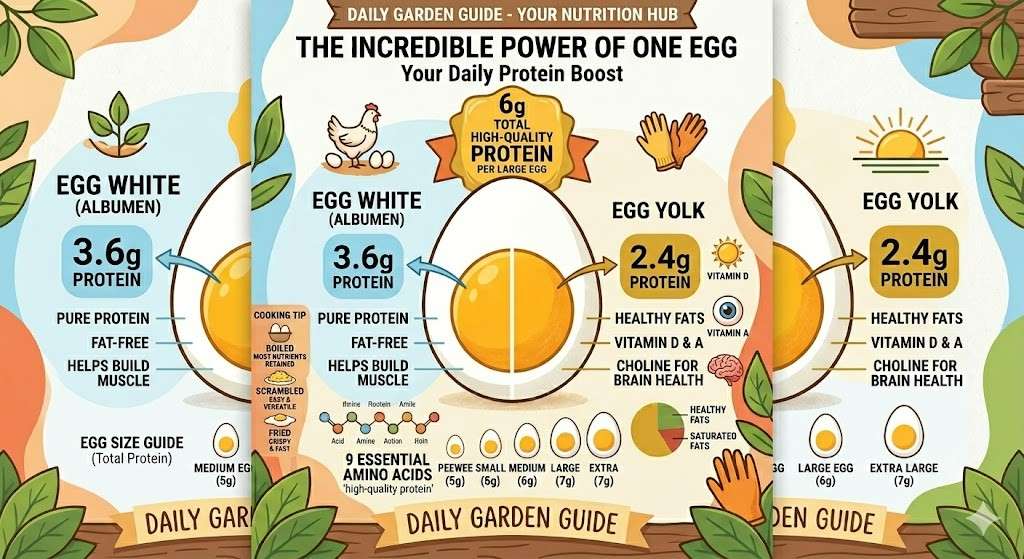
A standard large egg packs about 6 grams of complete protein (meaning it contains all 9 essential amino acids our bodies can’t make on their own).
Here is how it breaks down:
- The Egg White (Albumen): Holds about 60% of the total protein (3.6g). It’s essentially pure, fat-free protein.
- The Egg Yolk: Holds the remaining 40% (2.4g). Don’t skip the yolk! While it contains the fat, it also houses nearly all the egg’s vitamins (A, D, E, K), iron, and choline for brain health.
Here’s the average protein content based on egg size.
Egg Protein Chart
| Egg Size | Protein Amount | Calories |
| Small Egg | 4.8g | 54 |
| Medium Egg | 5.5g | 63 |
| Large Egg | 6.3g | 72 |
| Extra Large Egg | 7g | 80 |
| Jumbo Egg | 8g | 90 |
Most nutrition experts use the large egg measurement when discussing protein.
The Nutrient Breakdown (Per Large Egg)
Eggs are incredibly nutrient-dense, offering a lot of bang for your buck at just around 70 calories per egg:
- Protein: 6g (a “complete” protein containing all 9 essential amino acids)
- Healthy Fats: 5g (including monounsaturated fats)
- Choline: Crucial for brain health and liver function
- Lutein & Zeaxanthin: Antioxidants that protect your eyes
- Vitamins: Rich in B-vitamins, Vitamin D, and Vitamin A
Homestead Fact: The quality of protein doesn’t change based on shell color (brown vs. white), but pasture-raised backyard hens often produce yolks richer in vitamins and omega-3s!
Where Is the Protein in an Egg?
Many people think egg whites contain all the protein.
That’s one of the biggest misconceptions.
Egg White Protein
One egg white contains around:
- 3.5 grams protein
- very few calories
- almost no fat
Egg Yolk Protein
One yolk contains around:
- 2.5–3 grams protein
- healthy fats
- vitamins and minerals
I’ve noticed that people who skip yolks completely sometimes miss out on important nutrients that help support fullness and energy.
Why Eggs Are Trending in 2026
Searches related to eggs and high-protein evening snacks recipes have exploded this year.
Trending searches include:
- how much protein in an egg
- high protein breakfast
- protein pancake recipe
- protein oats
- egg white bites
- high protein meal prep
- boiled egg calories
- protein snacks
- healthy breakfast ideas
The reason is simple: people want affordable, practical nutrition.
Unlike many expensive supplements, eggs are:
- easy to cook
- budget-friendly
- versatile
- beginner-friendly
- meal prep friendly
Egg Nutrition Facts Beyond Protein
Eggs provide much more than just protein.
Key Nutrients in Eggs
| Nutrient | Benefit |
| Protein | Muscle support |
| Choline | Brain health |
| Vitamin D | Bone support |
| Vitamin B12 | Energy production |
| Selenium | Immune support |
| Healthy Fats | Satiety and hormone health |
Best Ways to Eat Eggs for Protein
The good news? Most cooking methods keep protein levels similar.
Boiled Eggs
One of the healthiest and easiest options.
Benefits
- portable snack
- easy meal prep
- low calorie
- filling
Scrambled Eggs
Soft texture and beginner-friendly.
Tip
Avoid excessive butter or oil if reducing calories.
Omelets
Perfect for adding vegetables and extra nutrients.
Poached Eggs
Lower added fat cooking method.
Air Fryer Egg Bites
Trending heavily in 2026 meal prep routines.
How Many Eggs Should You Eat Per Day?
This depends on your:
- activity level
- calorie needs
- protein goals
- overall diet
For most healthy adults, eating 1 to 2 eggs per day is perfectly safe and highly nutritious.
While eggs were historically feared due to their high cholesterol content, modern nutritional science has clarified that the dietary cholesterol in eggs does not significantly raise blood cholesterol levels for the vast majority of people.
Factors That Change Your “Ideal” Number

1. Your Overall Health Profile
- General Healthy Population: Up to 7 eggs a week (or 1–2 per day) shows no increased risk of heart disease in major clinical studies. Some studies even show a slight reduction in stroke risk.
- Diabetics or Those with Heart Disease: If you have high LDL (“bad”) cholesterol, type 2 diabetes, or existing heart disease, the American Heart Association generally suggests limiting cholesterol intake a bit more strictly. For these groups, sticking to 1 egg per day or focusing more on egg whites is often recommended.
- “Hyper-responders”: About 30% of the population is genetically predisposed to be more sensitive to dietary cholesterol. If you fall into this category, eating multiple eggs daily might bump your blood cholesterol numbers up.
2. The Rest of Your Diet
An egg doesn’t exist in a vacuum. What you cook it in—and what you eat with it—matters significantly more than the egg itself.
- The Classic Breakfast Pitfall: Eating two eggs fried in butter alongside greasy bacon and white toast introduces high amounts of saturated and trans fats, which negatively impact heart health.
- The Healthy Approach: Poaching or boiling your eggs and serving them alongside avocado, whole-grain toast, or sautéed spinach is a heart-healthy powerhouse meal.
Quick Tips for Egg Lovers
- Don’t Skip the Yolk Entirely: If you are eating multiple eggs a day solely for the protein, you can mix whole eggs with egg whites (e.g., 1 whole egg + 2 whites). However, don’t throw out all the yolks—almost all of the egg’s fat-soluble vitamins, choline, and antioxidants live in the yellow center.
- Watch the Cooking Oil: Opt for heart-healthy fats like olive oil or avocado oil spray rather than a heavy scoop of butter if you are eating them daily.
Eggs for Weight Loss
Eggs are incredibly popular in weight loss meal plans because they:
- increase fullness
- reduce cravings
- contain high-quality protein
- are relatively low calorie
Best Egg Meals for Weight Loss
- boiled eggs with salad
- veggie omelets
- protein pancake recipe with eggs
- egg wraps
- avocado egg toast
One mistake I made years ago was relying only on carb-heavy breakfasts. Adding eggs in the morning helped me stay full much longer.
Eggs for Muscle Gain
Eggs remain one of the best muscle-building foods because they contain complete protein and amino acids.
Why Fitness Experts Recommend Eggs
- rich in leucine
- supports recovery
- easy post-workout meal
- affordable protein source
Many athletes combine eggs with:
- protein shakes
- protein oats
- whole grain toast
- fruit smoothies
Step-by-Step High Protein Egg Breakfast
1. Crack 2–3 Eggs Into Bowl
Whisk until smooth.
2. Add Vegetables
Spinach, onions, peppers, or mushrooms work well.
3. Cook on Medium Heat
Avoid overcooking for softer texture.
4. Add Protein Side
Pair with protein oats or Greek yogurt.
5. Finish With Healthy Toppings
Avocado, herbs, or chili flakes add flavor.
Egg White vs Whole Egg: Which Is Better?

Egg Whites
Pros
- lower calories
- high protein
- low fat
Cons
- fewer nutrients
- less filling
Whole Eggs
Pros
- complete nutrition
- more satisfying
- better flavor
Cons
- slightly higher calories
For most people, whole eggs provide better nutritional balance.
Best High Protein Breakfast Ideas With Eggs
Eggs are one of the easiest ways to create quick, balanced, high protein breakfasts without complicated cooking. From protein pancakes and veggie omelets to protein oats with eggs and breakfast wraps, these simple meals can help keep you full longer while supporting energy, muscle recovery, and healthier eating habits throughout the day.
Protein Pancakes With Eggs
Eggs help create fluffy texture and increase protein.
Egg & Avocado Toast
Simple but satisfying.
Breakfast Burritos
Easy meal prep option.
Egg Muffins
Perfect grab-and-go breakfast.
Protein Oats With Eggs
Some people mix eggs directly into oats while cooking for extra creaminess and protein.
Meal Prep Tips Using Eggs
If you’re trying to simplify healthy eating, eggs are one of the easiest foods to meal prep ahead of time.
You can prepare:
- boiled eggs
- egg muffins
- breakfast burritos
- egg sandwiches
- protein snack boxes
I’ve noticed that keeping protein-rich meals ready in the refrigerator makes unhealthy snacking much easier to avoid during busy weekdays.
Common Egg Myths Explained
Myth 1: Eggs Are Bad for Everyone’s Cholesterol
Modern research shows eggs can fit into balanced diets for many healthy people.
Myth 2: Only Egg Whites Are Healthy
The yolk contains many valuable nutrients.
Myth 3: Brown Eggs Have More Protein
Protein content is nearly identical.
Myth 4: Raw Eggs Are Better for Protein
Cooked eggs are generally easier to digest safely.
Quick Start Guide Checklist
Beginner Egg Nutrition Checklist
✔ Eat whole eggs for balanced nutrition
✔ Pair eggs with vegetables or oats
✔ Meal prep boiled eggs weekly
✔ Avoid overcooking eggs
✔ Include protein-rich breakfasts daily
✔ Store eggs properly in the refrigerator
✔ Add herbs and spices for flavor
✔ Balance eggs with fiber-rich foods
Personal Tips From Experience
After years of experimenting with healthier breakfasts, eggs remain one of the few foods I never get tired of.
I’ve noticed that simple egg meals often work better long term than complicated diet recipes.
One trick I personally love? Adding cottage cheese to scrambled eggs. It makes them creamier while increasing protein naturally.
Another thing I learned the hard way: high heat ruins eggs quickly. Medium heat creates a softer texture and better flavor.

High Protein Foods That Pair Well With Eggs
Eggs work well alongside many other protein-rich foods.
Great Pairings
- protein oats
- Greek yogurt
- protein bread
- protein bars
- chia seeds
- cottage cheese
- protein shakes
- avocado toast
These combinations help create balanced meals that keep you energized much longer.
FAQs
How much protein is in one egg?
A large egg contains around 6–7 grams of protein.
Are egg whites healthier than whole eggs?
Egg whites are lower calorie, but whole eggs contain more nutrients.
Is it okay to eat eggs every day?
For many healthy adults, eggs can fit into a balanced daily diet.
Which egg has the most protein?
Jumbo eggs contain the highest protein because of larger size.
Are boiled eggs good for weight loss?
Yes. Boiled eggs are filling, portable, and relatively low calorie.
How much protein is in 2 eggs?
Two large eggs contain around 12–13 grams of protein.
Can eggs help build muscle?
Yes. Eggs contain complete protein and amino acids important for muscle recovery.
What’s the healthiest way to cook eggs?
Boiling, poaching, or lightly scrambling with minimal oil are great options.
Final Thoughts
The growing popularity of searches like how much protein in an egg shows that more people are focusing on practical, affordable nutrition in 2026.
The best part about eggs is their simplicity.
They’re:
- versatile
- inexpensive
- beginner-friendly
- protein-rich
- easy to meal prep
Whether you’re trying to improve breakfast habits, build muscle, stay fuller longer, or create healthier family meals, eggs remain one of the smartest high protein foods you can keep in your kitchen.
Start simple.
Cook consistently.
Experiment with healthier combinations.
And focus on sustainable eating habits that actually fit your lifestyle.
For more practical food, meal prep, and healthy living inspiration, visit Daily Garden Guide.
About The Author
